
industrial maintenance technician
What is it?
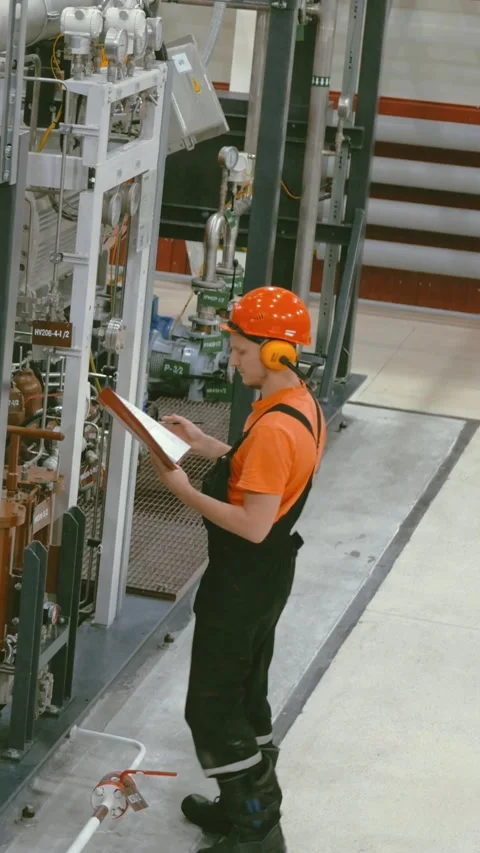
An Industrial Maintenance Technician is the “mechanical first responder” of a facility. Their job is to ensure that all machinery and equipment used in a manufacturing or industrial environment run smoothly, safely, and efficiently.
While a Robotics Technician focuses specifically on automated arms and controllers, an Industrial Maintenance Technician has a broader scope, covering everything from the motors and belts on a conveyor to the building’s electrical and fluid power systems.
Here’s a breakdown of some key responsibilities of an Industrial Maintenance Technician:
Core Responsibilities
A technician’s day is usually divided between proactive work (preventing breakdowns) and reactive work (fixing things that just broke).
Preventive Maintenance (PM)
This is the core of the job. To avoid costly downtime, technicians follow a strict schedule of:
Lubrication and Cleaning: Greasing bearings and cleaning sensors to prevent friction and overheating.
Parts Replacement: Swapping out belts, filters, or seals before they reach their “failure point.”
System Testing: Using diagnostic tools to check the “vitals” of a machine—such as vibration levels or temperature—to spot early signs of trouble.
Troubleshooting and Emergency Repair
When a machine fails on a live production line, the technician must act quickly:
Diagnostic Logic: Using “If/Then” logic to isolate the problem. Is it a mechanical jam, a blown fuse (electrical), or a leaking valve (pneumatic/hydraulic)?
Reading Schematics: Consulting complex blueprints of electrical or fluid systems to trace a fault.
Component Repair: Taking apart a motor, pump, or gearbox to replace internal parts like gears or bushings.
Equipment Installation and Upgrades
Set-up: Assembling new machinery and ensuring it is perfectly leveled and aligned.
Fabrication: Sometimes, a specific part isn’t available, so technicians may use welding, lathes, or milling machines to create or modify a temporary fix.
System Integration: Connecting new machines to the factory’s power and air supply lines.
Where they work
Manufacturing Facilities (The Core Sector)
Roughly 50% of industrial technicians work in factories. These environments are typically fast-paced and production-focused.
Automotive & Aerospace: Working on high-speed assembly lines and robotic welding stations.
Food & Beverage: Maintaining the massive, specialized machines that process and package everything from soda to snacks.
Electronics: Working in “clean rooms” or high-tech facilities maintaining the delicate machinery that builds circuit boards and devices.
Warehousing & Logistics
With the explosion of e-commerce, distribution centers have become high-tech hubs.
Fulfillment Centers (e.g., Amazon, FedEx): Maintaining miles of automated conveyor belts, high-speed sorting machines, and autonomous mobile robots.
Cold Storage: Specializing in the maintenance of industrial-scale refrigeration and climate-control systems.
Public Utilities & Infrastructure
These roles often involve ensuring critical services for the public remain uninterrupted.
Energy Plants: Maintaining turbines and generators at solar, wind, or gas power plants.
Water Treatment: Working on the large pumps, filtration systems, and chemical treatment machinery that provide clean water to cities.
Airports: Keeping the complex baggage handling systems and passenger bridges functional.
Specialized Institutional Settings
These technicians often lean more toward “facility” maintenance, focusing on the systems that keep a building alive.
Hospitals: Maintaining specialized medical gas systems, backup generators, and large-scale laundry or sterilization equipment.
Universities & Data Centers: Overseeing massive HVAC systems and electrical grids that must never go offline.
Length of Training
2-14 weeks
Type of Training
In Person/Hybrid
* Salary Range
$31,800 - $41,500
(entry level – experienced)
* Regional Jobs Available
5,276
(3 year forecast)
Is it Right For You?
Here are some essential skills and qualities for success as an Industrial Maintenance Technician:
Technical Skills
Multi-System Literacy: You need to understand how Mechanical (gears, bearings), Electrical (motors, wiring), Pneumatic (air pressure), and Hydraulic (fluid pressure) systems interact.
Schematic & Blueprint Reading: The ability to “read” the machine’s internal map. You must be able to follow complex wiring diagrams and mechanical drawings to find where a system has failed.
Diagnostic Tool Mastery: Beyond wrenches, you’ll use multimeters to check voltage, vibration analyzers to predict bearing failure, and infrared cameras to find overheating components.
Welding and Machining: Sometimes a replacement part isn’t in stock. Successful technicians often have basic fabrication skills to create a temporary fix or modify a bracket.
Digital & Data Skills
CMMS Proficiency: Most facilities now use Computerized Maintenance Management Systems. You’ll need to manage digital work orders, track parts inventory, and log your repairs on a tablet or smartphone.
HMI & SCADA Interaction: You’ll often interact with touchscreens (Human-Machine Interfaces) on the factory floor to acknowledge alarms, check system vitals, or adjust machine setpoints.
Predictive Data Literacy: As we move through 2026, top technicians are those who can look at sensor data and “see” a problem coming before the machine actually stops.
Physical Essential Personal Qualities
Logical Troubleshooting: This is perhaps the #1 quality. You need a “detective’s brain”—the ability to work backward from a symptom (like a squeaking belt) to find the root cause (like a misaligned motor).
Decisiveness Under Pressure: When a production line that costs $5,000 a minute is down, you have to be able to make a call. You need to stay calm and work methodically while everyone is waiting for you to finish.
Attention to Detail: Precision is non-negotiable. A bolt tightened to the wrong torque or a missed safety sensor can lead to catastrophic equipment failure or injury.
Adaptability: This is a field where you are a “continuous student.” New robots, new software, and new safety protocols are introduced constantly, so a willingness to learn is vital.
Physical & Safety Requirements
Manual Dexterity: You need the “finesse” to handle delicate electronics and the strength to handle heavy mechanical components.
Safety Rigor: A successful technician lives by Lockout/Tagout (LOTO) procedures. You have to be someone who never takes a shortcut when it comes to safety protocols.
